Uzbekistan’s applied art reflects a long tradition of skill, patience, and artistic imagination. Across the country, decorative craft developed in close connection with everyday life, local materials, and regional schools of workmanship. Ceramics, embroidery, wood carving, metalwork, and weaving all played a role in shaping the visual culture of the Uzbek people.
The Mastery of Uzbek Carpet Weaving
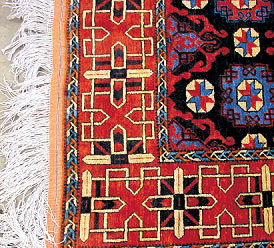
Among the best known branches of applied art is carpet weaving. Uzbek carpets are valued not only as household objects, but also as artistic works in which color, ornament, and technical skill are combined. Regional taste, material choice, and tradition all influenced the appearance of carpets, creating a rich variety of forms.
Categories of Traditional Weaving
- Dzhulkhirs — long-nap carpets associated with older and more archaic forms of weaving.
- Ghilyam — short-nap carpets with geometric or floral ornament, admired for their dense and orderly composition.
- Palas — flat-woven carpets, practical and decorative at the same time, often marked by bold striping and simple rhythm.
Traditional weaving also depended on dyes and fibers available to мастers in their region. Reds, browns, blues, and warm earth tones gave Uzbek carpets their distinctive visual character and linked them closely to the landscape and domestic environment in which they were made.
The Blue Fire: Decorative Ceramics
Ceramics occupy a special place in the arts of Uzbekistan. The pottery schools of different regions became known for their own colors, glazes, and ornamental language. In the Fergana Valley, especially in Rishtan, bright blue-green glaze became one of the most recognizable features of local pottery. In other centers, warmer yellow-brown ranges and softer painterly ornament were more common.
- Rishtan — noted for refined clay, blue-green glaze, and elegant floral designs.
- Gijduvan — known for warmer tones and expressive, painterly decoration.
- Khorezm — associated with bold rhythm and large ornamental forms.
Wood Carving and Jewelry
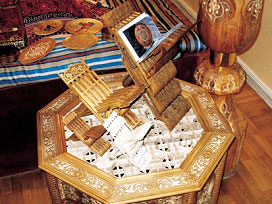
Architectural decoration in Uzbekistan has long relied on carved wood as well as painted and carved plaster. Doors, columns, furniture, boxes, and musical instruments all provided surfaces for ornament. In this tradition, geometry and vegetal pattern were carefully adapted to the shape of the object. Jewelry occupied a similar place in daily and festive life, especially in silver and gold pieces decorated with turquoise, coral, and other stones.
Craft, Workshop, and Environment
Traditional craft always developed in response to local conditions. Dry air, sunlight, and seasonal rhythms influenced how materials behaved, whether in the drying of pottery, the handling of fibers, or the preservation of wood and leather. This close connection between art and environment is one of the reasons Uzbek craftsmanship remains so deeply rooted in place.