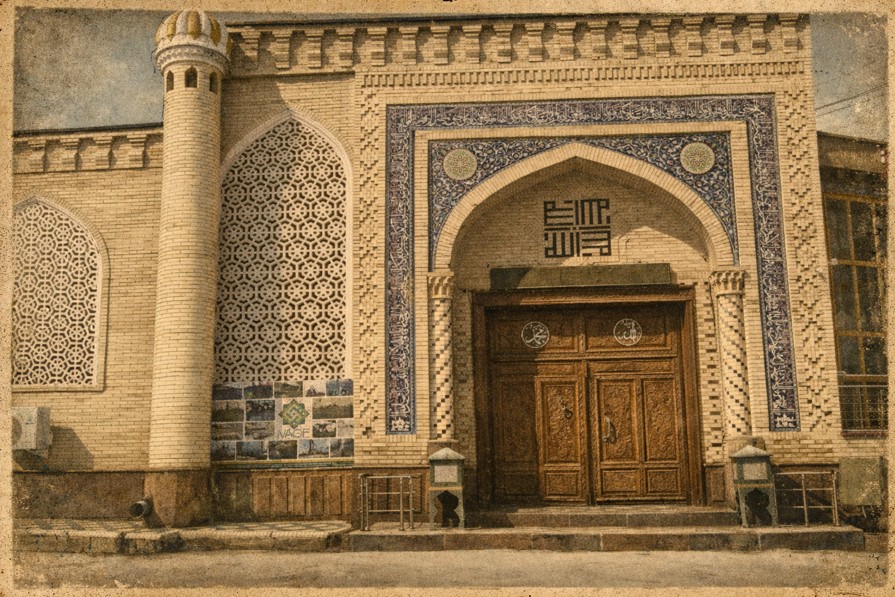
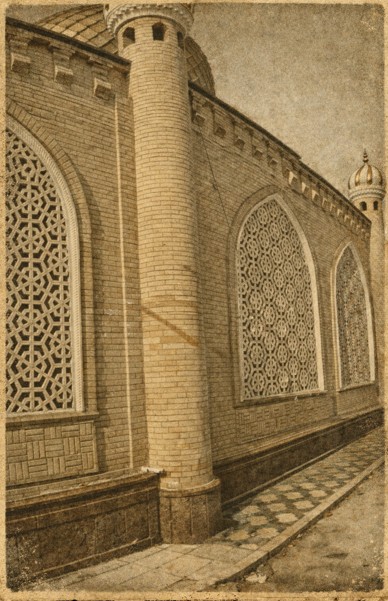
Samarkand is one of the great historic cities of Central Asia, and its architectural heritage is far richer than only its most famous ensembles. Alongside the monumental landmarks that draw international attention, the city also preserves smaller and quieter monuments that reveal the continuity of local craftsmanship and religious life. The Hoja-Nisbatdor Mosque belongs to this more intimate layer of Samarkand’s architectural memory.
The Hoja-Nisbatdor Mosque
The mosque is known as one of the historic religious structures of Samarkand. Although it is less widely described than the city’s great ceremonial monuments, it remains important as an example of urban religious architecture shaped by local tradition. Such monuments help explain how sacred space functioned not only as a landmark, but also as part of the daily life of the city.
Architectural Features
- Ayvan — an open, shaded architectural space that creates comfort and dignity at the same time.
- Wood carving — an important decorative element in Uzbek architectural tradition, often seen in columns, doors, and supporting structures.
- Ganch decoration — carved plaster ornament, valued for its delicate floral and geometric patterns.
- Mihrab area — the spiritual and visual center of the prayer interior.
These elements are typical of a regional architectural language in which proportion, ornament, and material work together. Even when the building is not monumental in scale, the careful treatment of its surfaces and spaces can give it great artistic value.
Harmony with Climate
Architecture in Samarkand developed in close relationship with climate. Open and shaded spaces, thick walls, and carefully arranged ventilation all helped make buildings more comfortable during hot, dry summers. In this sense, the ayvan is not only an aesthetic feature, but also a practical response to local weather conditions.
Preserving Historic Fabric
Like many monuments in Uzbekistan, smaller structures of Samarkand have had to endure the effects of time, climate, and urban change. Their preservation depends on careful attention to traditional materials and techniques. In this way, restoration becomes not simply repair, but the continuation of historical craftsmanship.
The Hoja-Nisbatdor Mosque is therefore valuable not only for its appearance, but also for what it represents: a quieter yet essential part of Samarkand’s living heritage. It helps modern readers and visitors understand the city as a place of layered architectural memory rather than a collection of isolated famous monuments.